




Partnerships for the Goals
Revitalize the global partnership for sustainable development
Research on SDG17 - Partnerships for the Goals
【Publications】

Figure 1 MUST SDG17 Paper Growth Trend
【Research Programs】Macau University of Science and Technology is committed to eradicating poverty in various aspects such as economy and resources through scientific research projects on poverty research. In recent years, the School of Business at MUST has carried out research projects such as "The Threshold Effect of Energy Poverty on Internal Population Migration: An Empirical Study Based on China" to study the relationship between poverty and population migration.
Relationships to support the goals
In July 2023, the Institute of Sustainable Development at Macau University of Science and Technology and the Jiangmen Marine Innovation and Development Research Center at Wuyi University held the "Seminar on High - quality Development of the Marine Economy in Macau and Jiangmen" at the Zhuhai MUST Science and Technology Research Institute. This seminar was a staged activity of the joint project "Research on the Evaluation and Realization Path of the High - quality Collaborative Development of the Marine Economy in the Guangdong - Hong Kong - Macao Greater Bay Area" between the Institute of Sustainable Development at MUST and the Jiangmen Marine Innovation and Development Research Center at Wuyi University. The two sides conducted in - depth discussions on continuing to strengthen cooperation in marine economic research. (For more details, please see https://www.must.edu.mo/news/52520-article0712151421).
Bringing Together International Wisdom to Build a Resilient Coast
Macau University of Science and Technology Promotes Climate Adaptation and Coastal Sustainable Development
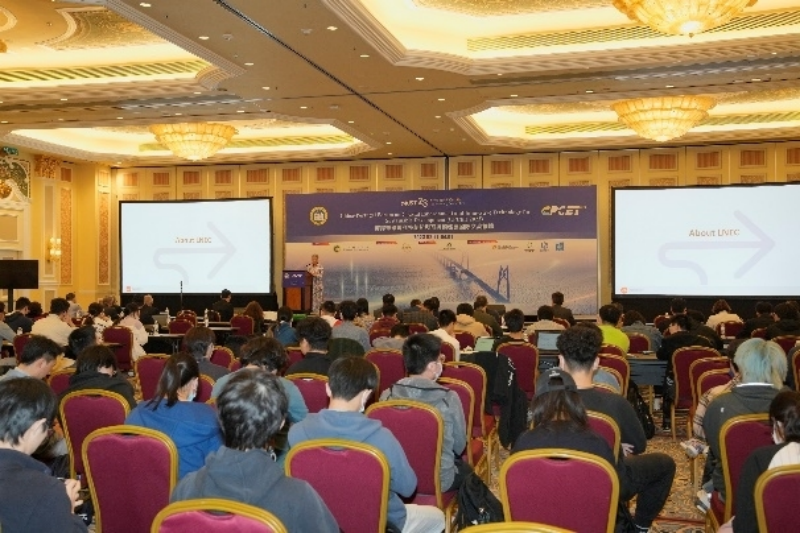
Scene of the coastal environment and resilience session at the 2023 Forum
Facing climate risks such as sea-level rise, extreme weather and coastal flooding, Macau University of Science and Technology, based in Macao and oriented toward the Guangdong-Hong Kong-Macao Greater Bay Area, continues to bring together universities, international professional organizations, research institutions and industry. Through international forums, research platforms and cross-regional exchanges, it advances in-depth research on climate change adaptation and coastal resilience.
Among these, the professional exchanges between Macau University of Science and Technology and the International Association for Hydro-Environment Engineering and Research (IAHR) are a representative example of the University partnering with non-governmental organizations in climate adaptation. IAHR is an independent, non-profit professional organization serving the global fields of water environment engineering and research, and is registered as an NGO in the United Nations Civil Society database. The two sides maintain exchanges on topics such as water security, climate adaptation and resilient coastlines, bringing international experience and professional networks to support the sustainable development of Macao and the region.
(For details, see https://www.must.edu.mo/id-13630/article/view/id-18890.html?locale=en_US)
Building an International Exchange Platform to Discuss Climate Adaptation
From 28 to 31 March 2023, Macau University of Science and Technology hosted the first International Exchange Forum on Coastal Environmental Science, Technology Innovation and Sustainable Development. Co-organized by Sands China and funded by the Education Fund of the Macao Special Administrative Region Government, the Forum received support from the International Association for Hydro-Environment Engineering and Research (IAHR), relevant departments of the Macao SAR Government, and the Pearl River Water Resources Commission of the Ministry of Water Resources. Experts and scholars from different countries and regions gathered in Macao to exchange views on topics including climate change adaptation, the coastal environment and resilience.
The Forum closely linked global climate issues with the practical needs of coastal cities. The keynote reports and discussions covered sea-level rise, extreme weather, urban flooding, coastal water quality, saltwater intrusion, water security, ecologically engineered shorelines and ecological restoration, addressing both risk identification and adaptation pathways such as urban flood control, infrastructure optimization, environmental monitoring and natural ecological restoration.
(For details, see https://www.must.edu.mo/id-13630/article/view/id-18890.html?locale=en_US)
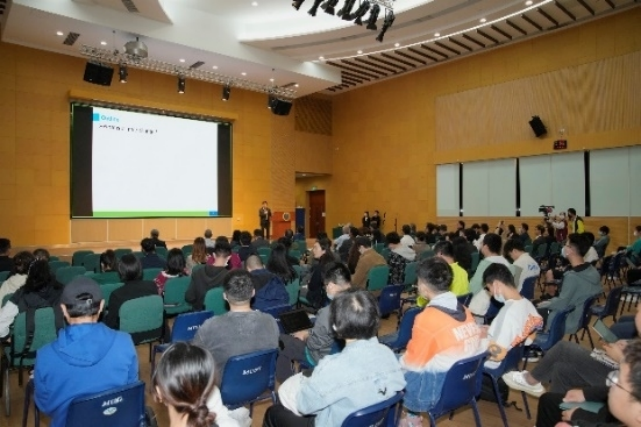
Participating experts share research findings and practical experience on climate change adaptation
Leveraging Research Platforms to Strengthen Observation and Practice
International exchange and local research practice reinforce each other. During the Forum, participating guests visited the National Field Scientific Observation and Research Station for the Coastal Ecological Environment of Macao, learning about the University's research foundations in long-term coastal observation, environmental monitoring and disaster response. The station conducts integrated monitoring of the sky, land and sea, carries out continuous observation of multiple environmental indicators, and focuses on monitoring and early warning, the prevention and control of compound coastal pollution, and the response to disasters such as floods.
Leveraging this platform, Macau University of Science and Technology links the cutting-edge concepts from international conferences with the actual environmental problems of Macao's coastline, promoting data accumulation, technology verification and research exchange. Through field visits, international experts can also gain an in-depth understanding of Macao's observation conditions and urban coastal characteristics, exchanging methods and experience on coastal environmental risks, early-warning technologies and resilience building.
(For details, see https://www.must.edu.mo/id-13628/activity/view/id-12055.html?locale=en_US)
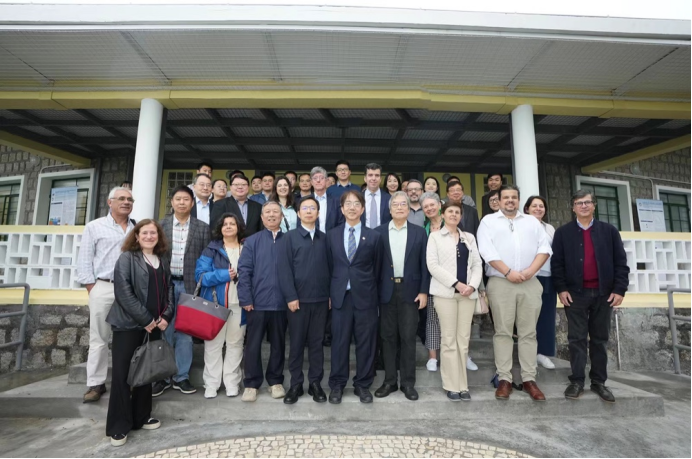
Forum guests visit the National Field Scientific Observation and Research Station for the Coastal Ecological Environment of Macao
Deepening Multi-party Collaboration to Serve the Green Development of the Greater Bay Area
In March 2025, Macau University of Science and Technology hosted the International Summit Forum on Climate Change and Coastal Resilience, continuing to focus on risks facing the Guangdong-Hong Kong-Macao Greater Bay Area such as sea-level rise, coastal flooding and extreme weather. The Forum emphasized enhancing the resilience of infrastructure, ecosystems and communities in a coordinated way through interdisciplinary and inter-institutional collaboration, so as to align research outcomes with the needs of sustainable urban development.
At the same event, Macau University of Science and Technology signed a strategic cooperation agreement with the Macau Civil Engineering Laboratory (LECM), with cooperation covering environmental protection, sustainable development and research innovation. Academic exchanges involving international professional organizations complement project cooperation among research institutions, jointly expanding the University's partnership network in the field of climate adaptation.
Looking ahead, Macau University of Science and Technology will continue to bring into play the disciplinary strengths and research platform role of a comprehensive university, deepening exchange and collaboration with universities, non-governmental professional organizations, research institutions and industry, and promoting the communication of climate adaptation knowledge, technological innovation and talent cultivation, contributing to building a safer, greener and more resilient coastline for Macao and the Guangdong-Hong Kong-Macao Greater Bay Area.
(For details, see https://www.must.edu.mo/id-13630/article/view/id-33241.html?locale=en_US)
Scene of the 2025 International Summit Forum on Climate Change and Coastal Resilience
Macau University of Science and Technology Participates in Sustainable Development Policy Research and Government Decision-Making Support
A University-wide Practice from Problem Identification to Monitoring and Assessment
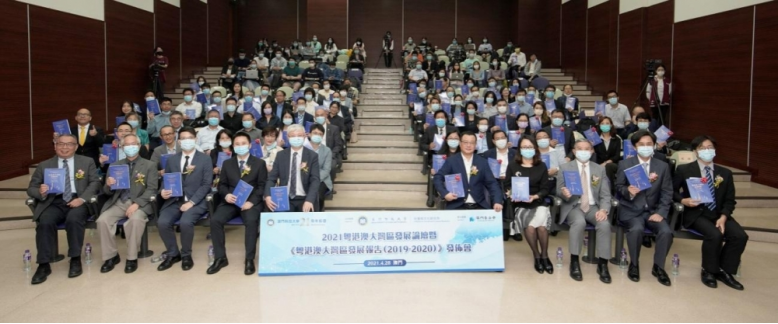
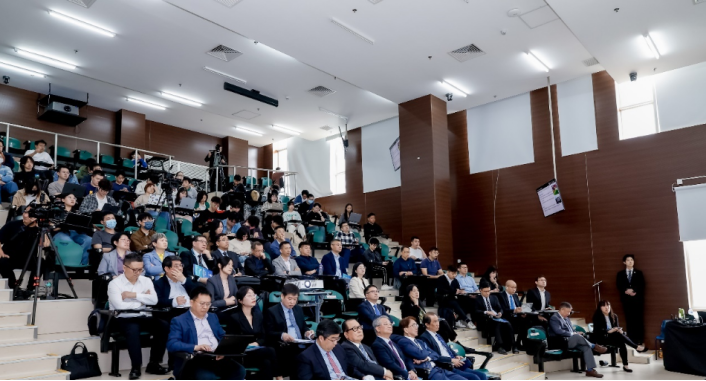
Macau University of Science and Technology releases the Greater Bay Area Development Report and puts forward policy recommendations
Acting in the name of the University as a whole, Macau University of Science and Technology directly participates in national and regional sustainable development policy research and government decision-making support through university-level research platforms such as the Institute for Sustainable Development, the Institute for Social and Cultural Research and the Macao Environmental Research Institute. The University has long undertaken projects commissioned by government departments, submitting research findings and policy recommendations to the National Committee of the Chinese People's Political Consultative Conference (CPPCC), relevant national ministries and commissions, the Macao SAR Government and the relevant Hengqin authorities, and providing a basis for policy formulation and subsequent adjustment through index compilation, scenario analysis, continuous monitoring and impact assessment.
In this process, Macau University of Science and Technology plays the role of researcher, advisor and evidence provider, rather than that of a policy-issuing or statutory decision-making body. Its engagement spans the identification of problems and challenges, policy and strategy recommendations, the assessment of different intervention scenarios, the monitoring of implementation outcomes and information feedback, forming a university-level practice in which research platforms support the government's governance for sustainable development.
(For details, see https://www.must.edu.mo/id-13630/article/view/id-19894.html?locale=en_US)
Identifying Problems and Forming Policy Recommendations
Policy research begins with the identification of real-world problems. In 2019, the Institute for Social and Cultural Research of Macau University of Science and Technology collaborated with Guangdong People's Publishing House to compile the Report on the Development of the Guangdong-Hong Kong-Macao Greater Bay Area (2018-2019), organizing more than 20 scholars from Macao, mainland China and Hong Kong to study institutional innovation, connectivity, spatial planning, transport development, talent policy and cultural cooperation, analyzing the opportunities, challenges, strategies and pathways for Macao's participation in the development of the Greater Bay Area, and putting forward specific recommendations on Hengqin-Macao cooperation, science and technology innovation platforms, higher education collaboration and youth development.
In the area of social and people's livelihoods, the Institute for Sustainable Development of Macau University of Science and Technology was commissioned by the Macao Health Bureau to conduct a study on Macao's medical security system. The project collected 3,005 valid samples through a two-stage questionnaire survey and conducted interviews with government departments, healthcare service users, medical associations, industry experts, social organizations and insurance institutions, while also employing literature review, indicator-system assessment and scientific data analysis. This approach incorporates public needs, professional opinions and quantitative evidence into policy research, helping the government identify key issues in medical security coverage, financing and service systems, and corresponds to the health and well-being goal of the United Nations Sustainable Development Goals.
(For details, see https://www.must.edu.mo/id-13630/article/view/id-20528.html?locale=en_US)
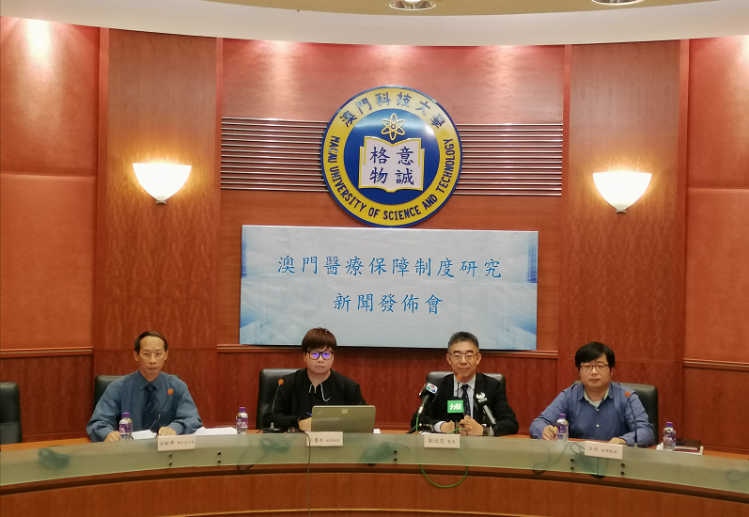
The medical security study commissioned by the Macao Health Bureau gathers policy evidence through questionnaire interviews and indicator assessment
Sustained Policy Research through University-level Think Tank Platforms
Relying on university-level research platforms such as the Institute for Social and Cultural Research, Macau University of Science and Technology has continuously carried out research on the Guangdong-Hong Kong-Macao Greater Bay Area and the Guangdong-Macao In-Depth Cooperation Zone in Hengqin. Since 2018, the Institute has successively compiled and published the Report on the Development of the Guangdong-Hong Kong-Macao Greater Bay Area, held the Greater Bay Area Development Forum, and conducted research on the topic of Macao's Strategies and Pathways for Integration into National Development, gradually forming a think tank working mechanism for continuously observing regional development, analyzing policy needs and putting forward policy recommendations.
In March 2023, Macau University of Science and Technology released the Report on the Development of the Guangdong-Hong Kong-Macao Greater Bay Area (2021-2022). This report is currently the only annual, thematic think tank report in Macao that observes and evaluates Macao's participation in the development of the Greater Bay Area. It focuses on topics such as the development of the Guangdong-Macao In-Depth Cooperation Zone in Hengqin, cultural and tourism development in the Greater Bay Area, urban public health and the development of higher education, and puts forward nearly 50 policy recommendations covering the recovery of the tourism and leisure industry, postgraduate education, healthy city development, medical care for Hong Kong and Macao residents, water environment protection, intellectual property protection and cooperation on international arbitration. This body of work shows that Macau University of Science and Technology is, through its university-level research institutions, continuously participating in research on major national regional development strategies, providing policy analysis and think tank support for Macao's integration into the overall national development and for Hengqin-Macao integration.
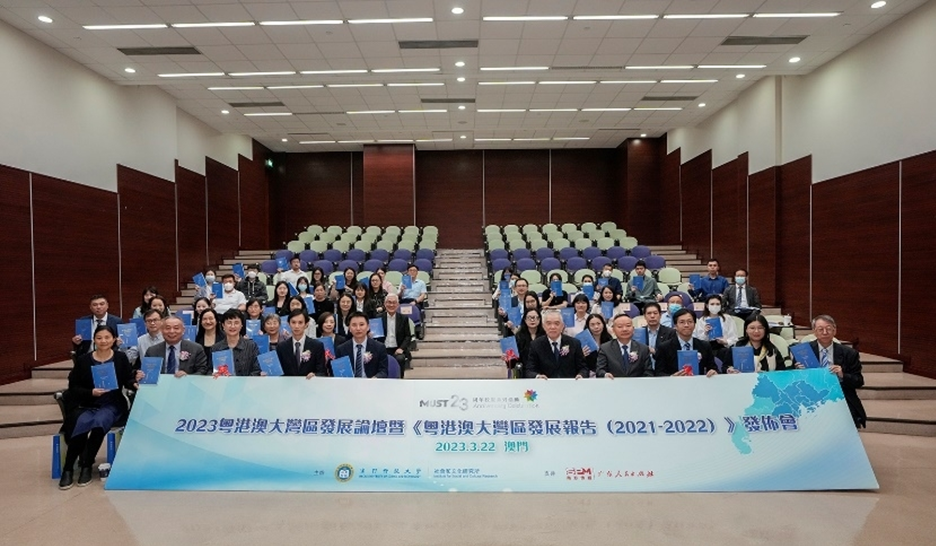
Macau University of Science and Technology continues to release the Greater Bay Area Development Report and exchanges research findings with the government and all sectors of society (For details, see https://www.must.edu.mo/news/49591-article0322184949)
Using Scenario Analysis to Assess Future Pathways
In the field of low-carbon transition, the study on urban energy consumption in Macao, in which the Macao Environmental Research Institute and related faculties of Macau University of Science and Technology participated, adopted the life cycle assessment (LCA) method to systematically estimate the greenhouse gas emissions of different energy carriers across the input, production and consumption stages, identify the main emission sources, and compare the potential changes under different mitigation measures through scenario analysis. The study not only shows where the problems lie but also provides quantifiable references for the government to set emission reduction targets and choose clean energy and energy-saving technology pathways.
The University's sustainable campus thematic page explicitly notes that this study helps identify and assess the key emission sources in Macao's urban energy consumption and proposes feasible emission reduction strategies, providing scientific support for the Macao Government in formulating policies on clean energy, energy-saving technologies and green, low-carbon development. The research is aligned with the nation's carbon peaking and carbon neutrality goals, enabling the University to participate in the upstream design of sustainable development policy through modelling and scenario research.
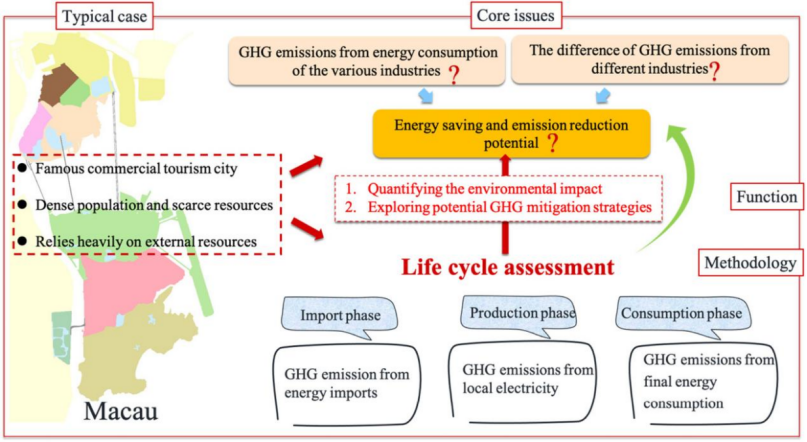
The study uses life cycle assessment to identify emission sources and explore potential emission reduction strategies (For details, see https://www.sciencedirect.com/science/article/pii/S0195925521001670?via%3Dihub)
Continuously Monitoring and Reporting on Policy Implementation Outcomes
After policies are implemented, Macau University of Science and Technology continues to provide monitoring data through long-term indicators and government-commissioned research. The Institute for Sustainable Development regularly publishes the Macao Consumer Confidence Index, Consumer Satisfaction Index and Employee Confidence and Satisfaction Index, several of which have been published continuously for more than fifteen years; publicly available materials from the University also list research projects commissioned by the Macao Environmental Protection Bureau, including the Energy Efficiency Status of the Macao Special Administrative Region 2019, 2021, 2023 and 2025, forming a basis for cross-year observation and comparison.
(For details, see https://www.must.edu.mo/id-13630/article/view/id-25196.html?locale=en_US)
These monitoring outcomes have entered national-level climate reporting. The First Biennial Transparency Report submitted by the People's Republic of China under the United Nations Framework Convention on Climate Change (UNFCCC) cites the findings of the Energy Efficiency Status of Macao SAR 2021 study in the section on the quantitative assessment of the Macao SAR's mitigation policy actions, using them to illustrate changes in energy consumption across sectors and reporting them together with the progress and effectiveness of mitigation actions. The University's research has thus extended from a regional government-commissioned project to become evidence used in the nation's compliance reporting.
In addition, the Office for the Development of the Energy Sector of the Macao SAR Government previously commissioned Macau University of Science and Technology to conduct a city-wide energy efficiency survey, continuously tracking the energy consumption, energy-saving awareness and energy-saving behaviour of residents, schools, enterprises and public institutions. The 2013 survey compared its results with comparable data from 2009 and 2011 to assess the implementation of the government's energy efficiency policies, energy-saving publicity, technology application and institutional measures, and put forward recommendations to inform the future formulation of energy efficiency policies. This work directly embodies MUST's practice of participating in the government's monitoring of sustainable development policy, intervention impact assessment and subsequent policy optimization.
(For details, see https://www.fpace.gov.mo/energytopics/ener_ee/ener_ee2013.pdf)
Supporting Adaptive Management through Data Feedback
The value of continuous monitoring lies in generating feedback. Long-term work represented by the Greater Bay Area development reports, the tourism and leisure development reports, energy efficiency studies and socio-economic indices enables the research team to observe policy progress, the effectiveness of measures and changes in the external environment on the basis of new data, and then to update its trend assessments and policy recommendations. The Report on the Development of Macao's Tourism and Leisure Industry (2019-2020), released in 2022, focused on assessing and forecasting the current state and trends of the industry's sustainable development under the impact of the pandemic, and stated that it would continue to observe new progress, new measures and new outcomes in the implementation of major national strategies.
The work chain, formed jointly by government-commissioned research, thematic reports, scenario simulation, cross-year indicators and policy feedback, provides the necessary conditions for adaptive management: first identify problems and propose strategies, then continuously monitor the results, and finally revise assessments and recommendations in light of changes. Relying on this complete closed loop, MUST substantively participates in the process of national and regional sustainable development policy by providing independent research, quantitative tools and professional advice.
(For details, see https://www.must.edu.mo/id-13630/article/view/id-19057.html?locale=en_US)
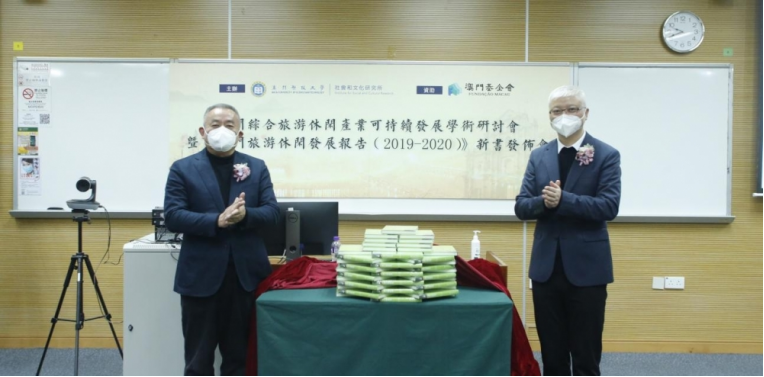
Macau University of Science and Technology continuously assesses the industry policy environment and sustainable development trends through annual and thematic reports
Publication of SDG reports
Education for the SDGs

